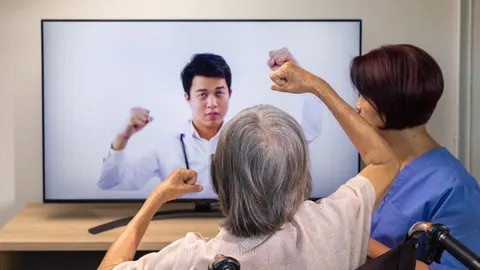
Kinex Medical Company cares about the safety and well-being of it’s patients and offers a list of resources to utilize before, during and after any type of disaster or emergency situation. Below you will find links to national and location community resources that patients and their caregivers may use to obtain more information regarding how to handle situations such as floods, hurricanes, tornadoes, hazardous chemical spills, transportation accidents, proximity to a power plant, other severe weather conditions.
County officials use the Emergency Alert System which sends out alerts to broadcast media and also cable television, satellites, pagers, direct broadcast satellite and television. Also, warnings are sent directly to mobile phones within the county via Wireless Emergency Alerts.
Direct registration for alerts can be found here;
https://hcfl.gov/residents/public-safety/emergency-management/hcfl-alert
Or by calling (813) 272-6602
Emergency or disaster training videos available at
https://hcfl.gov/residents/public-safety/emergency-management
Hurricanes, Floods, Tornadoes
Information on how to prepare, evacuate and when it’s safe to return following a disaster can be found on the National Oceanic and Atmospheric Administration or NOAA.
https://www.noaa.gov/
Hurricanes, Floods, Tornadoes, Wildfires, Emergency Situations/Disasters
Federal Emergency Management Agency provides many resources about how to receive assistance in your area during and following a disaster.
https://www.fema.gov/
Florida Disasters
This site provides resources and information on disasters such as hurricanes, severe weather, and how to plan and recover following a disaster.
https://www.floridadisaster.org/
Alliance for Individuals with Disabilities
This group assists public safety officials to provide resources to the public in the event of emergency or interaction with law enforcement. This provides the community with national resources to the public as well.
https://nps-aid.org/
Florida Special Needs Registry
This registry allows individuals with special needs to be put onto a list where EMS can utilize during a disaster to receive assistance.
https://snr.flhealthresponse.com/
INFORMATION FOR HME CONSUMERS - Registered with Special Needs Registry
This information should be included for consumers on the special needs registry in preparation for a possible evacuation to a special needs shelter.
Please note: The special needs shelter should be used as a place of last refuge. The evacuee may not receive the same level of care received in the home and the conditions in a shelter may be stressful.
1)It is the expectation of the special needs shelter that a caregiver1 accompany and remain with the consumer throughout the stay.
2)The following is a suggested list of what consumers need to bring to the special needs shelter during an evacuation; the consumer should check with the assigned shelter to confirm the necessary items and/or those items which may not be accommodated:
- Identification and current address.
- A copy of the consumer’s plan of care, if applicable.
- Medication listing including directions for the dose, frequency, route, time of day and any special considerations for administration; equipment and supplies list including the phone, beeper and emergency numbers for the consumer’s physician, pharmacy and, if applicable, oxygen supplier; necessary medical equipment and supplies; Do Not Resuscitate Order (DNRO), if applicable.
- Bed sheets, blankets, pillow, folding lawn chair, air mattress.
- Prescription and non-prescription medications needed for at least 5 to 7 days; oxygen for 5 to 7 days, if needed and shelter space allows.
- Special diet items, non-perishable food for 5 to 7 days and 1 gallon of water per person per day.
- Glasses, hearing aids and batteries, prosthetics and assistive devices.
- Personnel hygiene items for 5 to 7 days (including adult diapers, colostomy supplies, etc.)
- Extra clothing for 5 to 7 days.
- Flashlight and batteries.
- Self-entertainment and recreation items such as books, magazines, quiet games.
- Labeled shoe box or other small closed container to hold the majority of the smaller items listed above to facilitate storage and ease of use.
3) All persons using the special needs shelters need to know the following:
- Space allotted for the consumer includes space for the caregiver. A special needs shelter can accommodate only one caregiver at a time; any other family members, friends, etc. should go to a regular shelter.
- The caregiver must provide his or her own bedding.
- Caregivers who regularly assist the consumer in the home are expected to continue to provide the same care in the shelter.
- Service dogs are allowed in the shelter. Check with the local Emergency Management office to see if other pets are permitted.
- Bring food items as listed above. It is possible only sparse meals will be provided.
- Smoking is not allowed in the shelter.
1 Caregivers may be relatives, household members, guardians, friends, neighbors, employees or volunteers.